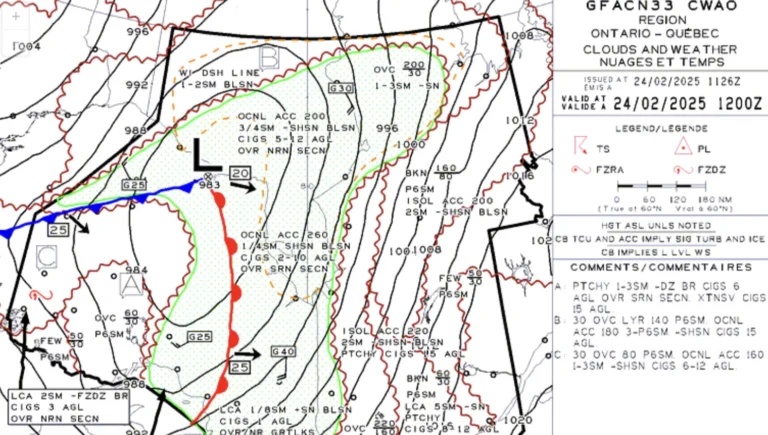
Recreational Pilot Permit Vs Private Pilot License
Here is a direct comparison of a Recreational Pilot Permit Vs a Private Pilot License
Minimum Age
Recreational Pilot Permit: Minimum 16 years old
Private Pilot License: Minimum 17 years old
However, students may begin their flight training before this age.
Medical Requirement
Recreational Pilot Permit: Minimum Category 4, 3, or 1.
Private Pilot License: Minimum Category 3 or 1.
Minimum Flight Training Requirement
Recreational Pilot Permit: 25 hours consisting of 15 hours dual flight instruction and 5 hours solo
Private Pilot License: 45 hours consisting of 17 hours dual flight instruction and 12 hour solo.
Dual flight instruction means time spent being taught by a licensed flight instructor. Solo refers to time spent by yourself in an aircraft practicing flight maneuvers. The times listed are minimums and most students will fly well over the posted Transport Canada requirements.
Ground School Requirement
Recreational Pilot Permit: There is no formal requirement, however students must write and pass the Pilot Permit – Recreational – Aeroplane exam (RPPAE exam is 80 questions) or the Private Pilot License -(PPAER exam is 100 questions). Most students choose to enrol in the Canadian Flight Trainers Private Pilot Ground School Course to gain the necessary theoretical and practical knowledge to write the exam.
Private Pilot License: Students must complete a minimum of 40 hours of ground school and they must obtain a minimum of 60% on the Private Pilot Licence – Aeroplane (PPAER) exam. Most students enrol in our Private Pilot License Ground School Course to complete this requirement.
Skill Requirement
Recreational Pilot Permit: Must complete the Recreational Pilot Permit or Private Pilot License Flight Test
Private Pilot License: Must complete the Private Pilot Flight Test
Flight tests are done with a Transport Canada Inspector or Transport Canada designated flight test examiner.
Privileges and Limitations
Recreational Pilot Permit
- Maximum of 1 passenger
- Cannot fly and airplane with more than 4 seats
- Fly in Canada only
- Only add a float rating
- Cannot fly for money
Summary
While the recreational pilot permit may seem like a better choice due to the lower requirements, the amount of time spent in flight training will only be slightly less than that of a private pilot license. With many of the same exercises having to be completed and for slightly more money, you can have the extended privileges that come with having a Private Pilot License in Canada.


Why Airlines May Suspend Cuba Flights During a Fuel Disruption
When jet fuel becomes unavailable across an entire country, the first question people ask is: “Why can’t the airline just bring more fuel with them?” In aviation, this strategy is called tankering – uplifting extra fuel at the initial departure airport so that the aircraft can arrive and still have enough fuel to safely depart

Pilot Bag
What is a pilot bag? A pilot bag is also known as a flight bag. It is a bag used by pilots at all stages in their flying to store the necessary pilot supplies used for their flights. Pilot bags come in a lot of different varieties while almost anything can be used as a

New Transport Canada Readback Rules: What Every Canadian Pilot Needs to Know
On November 20, 2025, Transport Canada published Advisory Circular (AC) 602-008 – Pilot Readback Requirements. It explains new rules that will soon affect every pilot operating in Canadian Domestic Airspace, from student pilots in the circuit to airline crews on the line. These changes haven’t “gone live” in the regulations yet, but they will become
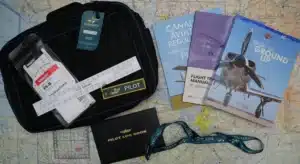
Pilot Supplies to Begin Pilot Training
Pilot Supplies to Begin Pilot Training A lot of our new students contact us for assistance because of how overwhelming the pilot training process can be. One of the most common questions stems from which pilot supplies are needed to being training. There are a lot of options out there and it is sometimes hard

What Happens at an Aviation Medical?
A very common question we hear from new student pilots and even existing pilots is what happens at an aviation medical. For existing pilots, questions about the renewal process usually take center stage as the medical examination is the same as their initial medical exam but the paperwork is slightly different. Whether you’re starting flight
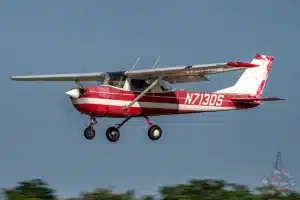
Pilot Licence Conversion: FAA to Transport Canada Made Easy
Converting an FAA Pilot Licence to Transport Canada If you’re a pilot who trained in the United States and are now looking north to Canada, you’ve probably wondered how to make your licence valid here. Whether it’s because you’re moving, you’ve married a Canadian, or you just want to expand your flying opportunities, converting an

Teen Pilots in Canada: What Parents Need to Know Before Starting Flight Training
My first flight in a small airplane took place when I was 15 years old, just before my 16th birthday. Up to that point, my aviation experiences were no more than travel on large transport category aircraft and an abundance of time on Microsoft Flight Simulator. As a teenager, it took quite a bit of
Canadian Pilot Training and Licensing Statistics in 2024/2025
Transport Canada’s latest Pilot Training and Licensing Statistics reveal an interesting picture of the aviation training sector. The newest statistics were made available during an ATAC Flight Training Committee meeting held in May of 2025. The newest statistics show a rebound after a pandemic-era decline and shifting demographics in licence holders. This article will offers
Discover more from Canadian Flight Trainers
Subscribe to get the latest posts sent to your email.